Design with and for AI
AI is fundamentally changing how we create, design, and solve problems. But as AI becomes more capable, human creativity becomes more important—not less. The challenge is no longer simply understanding what AI can do, but deciding what it should do, where it adds meaningful value, and where human judgment needs to remain firmly in control.
Designing with and for AI requires a shift in how design teams work. Traditional design thinking—grounded in human needs, curiosity, experimentation, and empathy—remains essential, but the process is becoming faster, more iterative, and less predictable. AI can expand the solution space, accelerate exploration and prototyping, and uncover possibilities that teams might not have considered on their own.
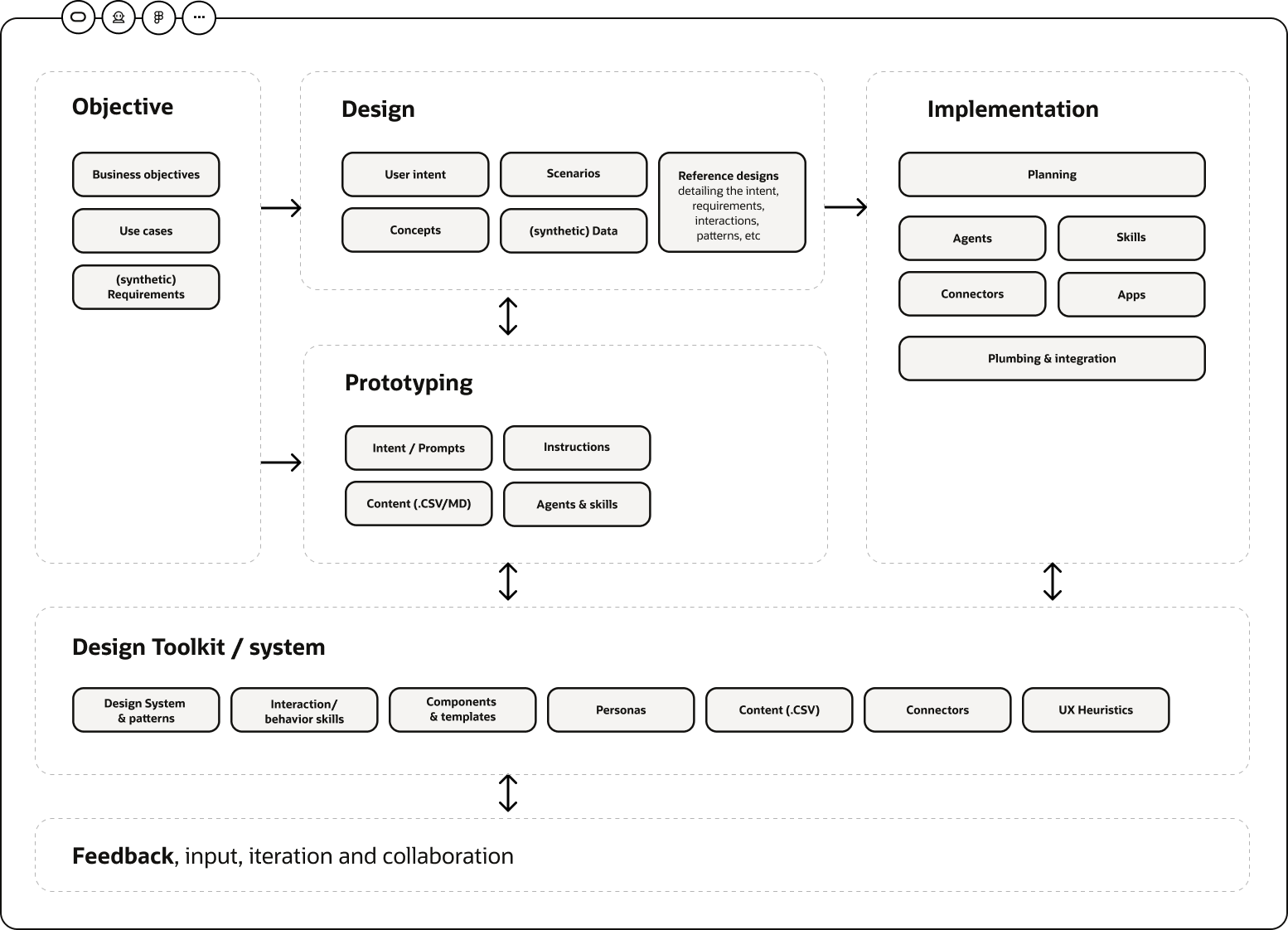
The strongest AI experiences come from treating AI as neither the solution nor the strategy. Technology needs to serve a clear human purpose. That means designing for uncertainty, building trust and transparency into the experience, and understanding when to automate, when to assist, and when to leave people in control. And along with that, our process will evolve to continue create…
Before AI
You all will recognize this as a typical design process, in particular for consulting-type projects. My activities during the design process depend on the size of my team, and my role on the project (project or people manager, product owner or creative director) and includes hands-on design if and where needed. While the actors, timelines and scope may be different for in-house vs consulting (agency) design, product development typically does go through these phases below. And in both environments, if phases or steps are skipped, such as building a deep understanding of the client, customer and the true opportunity, we’ll ‘pay’ for it later..
I love the ambiguity in the earlier phases of defining what we’ll be creating, and more importantly: why, turning deep understanding of the customer into scenario-driven designs, the tough calls to make to align scope, time and people to ensure quality and delight no matter how small or big the scope of the project will be… And I get a lot of satisfaction of getting all the ‘trains on the rails’ to ship a compelling product, system or service - preferably all three.
-
Inquire
Business development
Objectives
Planning, scoping, resourcing
-
Immerse
Research & interviews
Technology deep-dive
Recommendations report
Product/project strategy
High-level concepts
-
Design
Use cases and scenarios
Design - concepts, experience, interaction model, visuals
Requirements and business rules
Design reviews
Concept testing
-
Implement & deploy
Planning & scoping
Product and release strategy
Detailed design & specs
Exit criteria
UI copy & documentation
Sprint planning
Quality control
